Browsing Resilient African Feed and Fodder Systems (RAFFS) by Issue Date
Now showing items 1-20 of 28
-
Knowledge Management, Advocacy, Visibility and Communication Strategy
(2022)This strategy for Knowledge Management, Advocacy, Visibility, and Communications within the RAFFS Project comprises several essential components: 1. Knowledge Management: This foundation of the strategy equips decision-makers ... -
Enhancing Resilient African Feed and Fodder Systems - Policy Note
(2023)Policy Note on Enhancing Resilient African Feed and Fodder Systems. -
Guidelines for Feed and Fodder Data Management
(2023)The Guidelines for Feed and Fodder Data Management have been developed to address the critical data and digital capacity challenges affecting the feed and fodder sector across Africa. The sector faces data fragmentation, ... -
Resilient African Feed and Fodder Systems (RAFFS) project Annual Report Reporting Period: 1st December 2022 to 30th November 2023
(2023)This report, ‘Engendering Greater Understanding to Set a Transformative Agenda for addressing Feed and Fodder Shortages on the African Continent,’ captures progress in executing the RAFFS project activities from 1 December ... -
Press Release: Resilient African Feed and Fodder Systems Stakeholder Initiation and Consultative Workshop
(2023-07-24)Press Release on the Resilient African Feed and Fodder Systems Stakeholder Initiation and Consultative Workshop held in Naivasha, Kenya from 24-28th July, 2023. -
Communique: Partnership for Industrialisation of Zimbabwe’s Feed and Fodder sector; Harare, Zimbabwe 18-22 November 2024
(2024-11-18)A meeting was held on the dates stated above to discuss Partnerships to Support Industrialisation of Feed and Fodder Investments. The meeting was convened by Ministry of Lands, Agriculture, Fisheries, Water and Rural ... -
African Women in Animal Resources Farming and Agribusiness Network Magazine
(2025)Since its inception in 2020, culminating in formal registration on 9th April 2024, the African Women in Animal Resources Farming and Agribusiness Network (AWARFA-N) Uganda Chapter has been at the forefront of empowering ... -
Women Driving Feed and Fodder Innovation in Cameroon: AWARFA-N’s Success Story
(2025)AWARFA-N Cameroon was established in December 2023 as a network of Cameroonian women working in the livestock and agribusiness sector. The organization’s mission is to become the leading provider of baled fodder in Cameroon, ... -
Nourishing Livestock, Enriching Lives: AWARFA-Zimbabwe’s Sustainable Fodder Initiative
(2025)AWARFA-N Zimbabwe is an organization dedicated to empowering women in agriculture. With a focus on the livestock sector, this organization aims to bridge the economic gap between genders and enhance the participation of ... -
Feed and Fodder: Critical Input for Enhanced Livestock Productivity, Human Food an Nutrition Security, Livestock Sector Stability and Youth Employment
(2025)Globally two thirds (2/3) of arable land is for raising livestock, and fifty-four percent (54.4%)1of coarse grains (such as maize, sorghum, barley, millet, oats and rye) is purposively produced for feeding animals. This ... -
Pollination services: an untapped input for enhancing productivity in crops and Fodder essential for poverty alleviation and attainment of elusive nutrition targets and ecosystem biodiversity
(2025)Pollination serves as a basic pillar for 9.5% of the world’s agricultural food production, thereby improving the profitability and productivity of 75% of agricultural crops. Without pollinators,the human race and all of ... -
Women Catalysing Change in the Animal Resources Sector
(2025)The African Women in Animal Resources Farming and Agribusiness Network (AWARFA-N) Nigeria is pioneering a transformative initiative to revolutionize feed and fodder production, empower women and strengthen the livestock ... -
Empowering Women, Nourishing Livestock: AWARFA-N’s Journey to Sustainable Feed and Fodder Model in Somalia
(2025)AWARFA-N’s central strategy involves the bulk multiplication of improved energy and protein fodder varieties within Somalia’s wetlands. This includes the cultivation of Sugar Graze Sorghum, Improved Sweet Potato Vines ... -
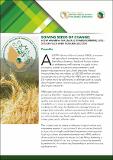
Sowing seeds of change: how AWARFA-N Kenya is transforming Livestock Feed and Fodder
(2025)WARFA Network Kenya Limited (ANKL), a women led agricultural enterprise, is transforming East Africa’s livestock feed and fodder market by addressing inefficiencies in supply chains, promoting women’s economic empowerment, ... -
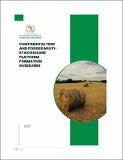
Continental Feed and Fodder Multi-Stakeholder Platform Formation Guidelines
(2025)The proposed Continental Feed and Fodder Multi-Stakeholder Platform (CF&F-MSP) is designed to provide a formal apex structure to unify, amplify, and steer national MSP efforts. Drawing membership from all African national ... -
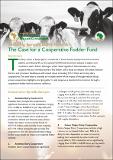
Securing Kenya’s Dairy Future: The Case for a Cooperative Fodder Fund
(2025)The dairy sector in Kenya plays a crucial role in food security, employment, and economic stability, contributing 4% to the national GDP. However, climate-induced droughts have resulted in severe fodder shortages, which ... -
Sustainable Solutions for Dairy Growth: Unlocking the Potential of Feed and Fodder in Africa
(2025)The Resilient African Feed and Fodder Systems (RAFFS) Project conducted an extensive assessment of the feed and fodder sectors across six African countries: Kenya, Nigeria, Zimbabwe, Uganda, Cameroon, and Somalia. The ... -
CAADP Strategy and Action Plan 2026-2035: Building Resilient and Sustainable Agrifood Systems in Africa
(2025-01-11)The CAADP Strategy and Action Plan (2026-2035) envisions sustainable and resilient agrifood systems for a healthy and prosperous Africa. In line with Agenda 2063, the African Common Position on Food Systems and the COP28 ... -
Kampala CAADP Declaration on building resilient and sustainable Agrifood systems in Africa
(2025-01-11)RECOGNIZING the crucial role of inclusive agro-industrialization to drive economic growth, job creation, and shared prosperity, it is essential to integrate agricultural production into broader supply chains to combat food ... -
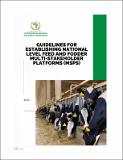
Guidelines for establishing national level feed and fodder multi-stakeholder platforms (MSPS)
(2025-07)In response to recurring feed and fodder shortages that undermine livestock productivity and livelihoods, these Guidelines deliver a concise, adaptable blueprint for designing and operationalizing Multi-Stakeholder Platforms ...