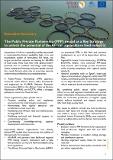
Executive Summary: The Public Private Partnership (PPP) model as a Key Strategy to unlock the potential of the African aquaculture feed industry
| dc.contributor.author | AU-IBAR | |
| dc.date.accessioned | 2025-12-08T08:29:38Z | |
| dc.date.available | 2025-12-08T08:29:38Z | |
| dc.date.issued | 2025 | |
| dc.identifier.uri | http://repository.au-ibar.org/handle/123456789/1796 | |
| dc.description.abstract | Aquaculture in Africa is expanding rapidly, yet growth is constrained by limited availability, high costs, and inconsistent quality of formulated fish feeds, the largest production expense, accounting for 60–80% of total costs. Many local feed mills operate below potential due to outdated technology, weak supply chains, inadequate financing, and poor-quality control. As a result, farmers often rely on expensive imports, undermining profitability and competitiveness. | en |
| dc.format.extent | 2p. | en |
| dc.language.iso | en | en |
| dc.publisher | AU-IBAR | en |
| dc.subject | Climate Change | en |
| dc.subject | Aquaculture feed industry | en |
| dc.subject | Public–Private Partnership (PPP) | en |
| dc.subject | Aquaculture | en |
| dc.title | Executive Summary: The Public Private Partnership (PPP) model as a Key Strategy to unlock the potential of the African aquaculture feed industry | en |
| dc.type | Policy Brief | en |