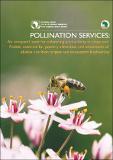
Pollination services: an untapped input for enhancing productivity in crops and Fodder essential for poverty alleviation and attainment of elusive nutrition targets and ecosystem biodiversity
| dc.contributor.author | Human, Hannelie | |
| dc.contributor.author | Aguddah, Edwin | |
| dc.contributor.author | Gowe, Jacqueline | |
| dc.contributor.author | Ossiya, Sarah | |
| dc.contributor.author | Yusuf, Abdullahi | |
| dc.contributor.author | Ikechukwueneh., Chinyere | |
| dc.date.accessioned | 2026-03-04T13:46:32Z | |
| dc.date.available | 2026-03-04T13:46:32Z | |
| dc.date.issued | 2025 | |
| dc.identifier.uri | http://repository.au-ibar.org/handle/123456789/1824 | |
| dc.description.abstract | Pollination serves as a basic pillar for 9.5% of the world’s agricultural food production, thereby improving the profitability and productivity of 75% of agricultural crops. Without pollinators,the human race and all of earth’s terrestrial ecosystems would not survive. More than half of the world’s diet comes from animal-pollinated plants. Globally, the economic contribution of insect pollinators to food crops is estimated at US$ 195 - 387 billion [2]. Without proper pollination services, yields are not optimised and can be reduced by 40%. As much as 50% of global micronutrient supplies come from pollinator-dependent crops in Central and southern Africa suggesting that underutilization of managed pollination services and disruptions in natural pollination could have serious implications for Africa’s food security which aligns with he CAADP theme post Malabo | en |
| dc.format.extent | 32p. | en |
| dc.language.iso | en | en |
| dc.publisher | AU-IBAR | en |
| dc.subject | Pollination | en |
| dc.subject | Crops and fodder | en |
| dc.subject | Poverty alleviation | en |
| dc.subject | Ecosystem biodiversity | en |
| dc.title | Pollination services: an untapped input for enhancing productivity in crops and Fodder essential for poverty alleviation and attainment of elusive nutrition targets and ecosystem biodiversity | en |
| dc.type | Book | en |